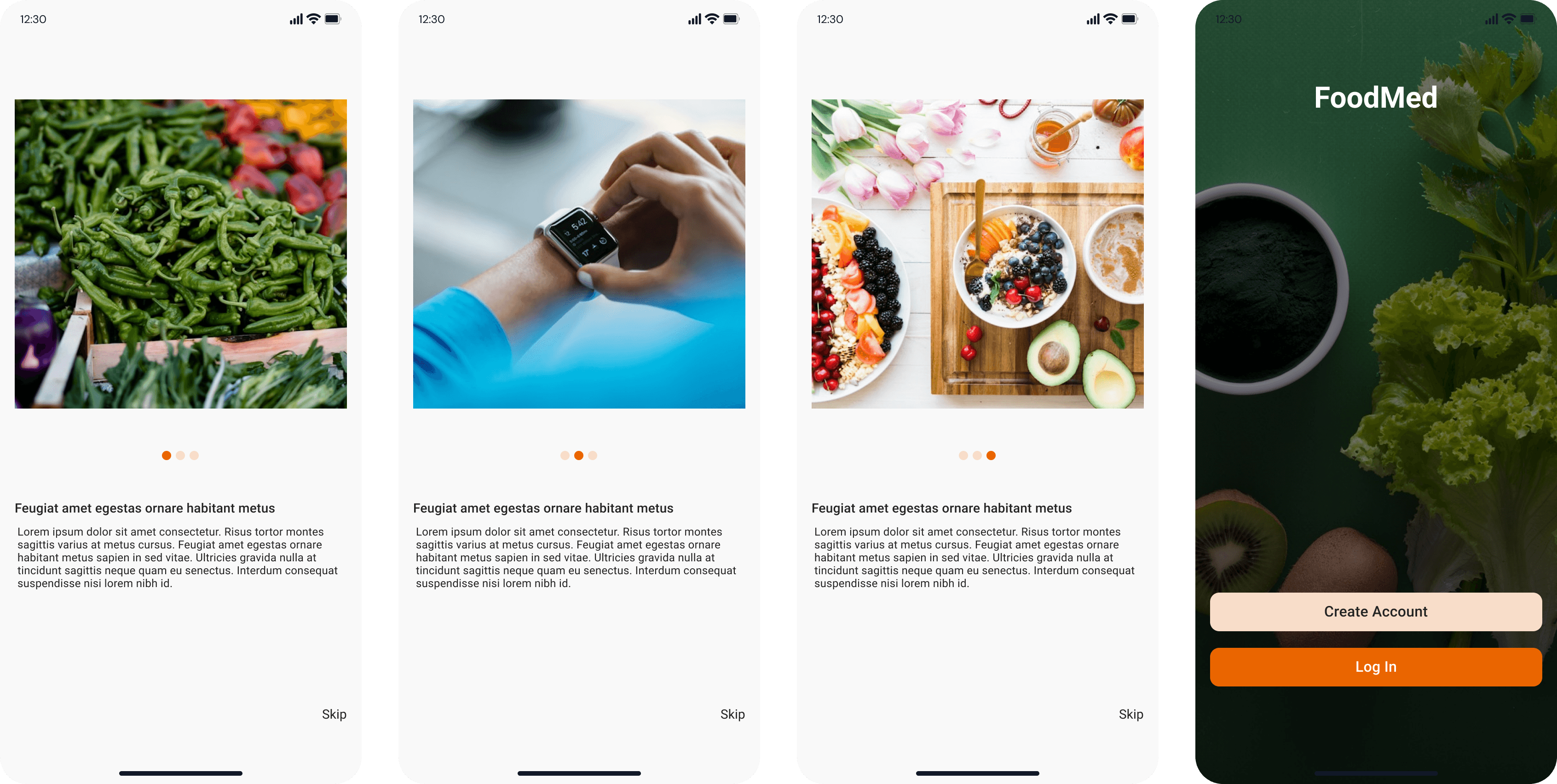
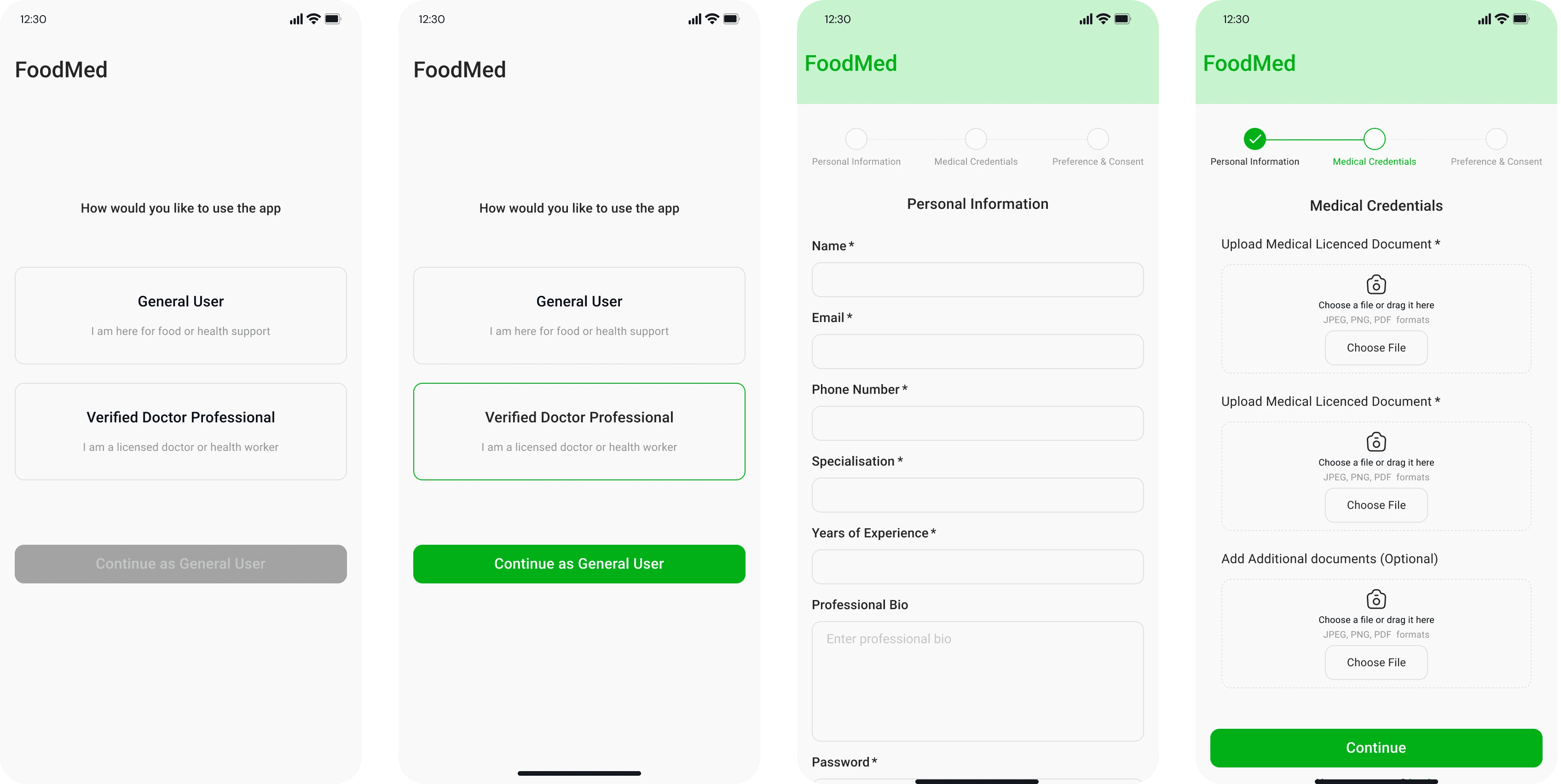
FoodMed App
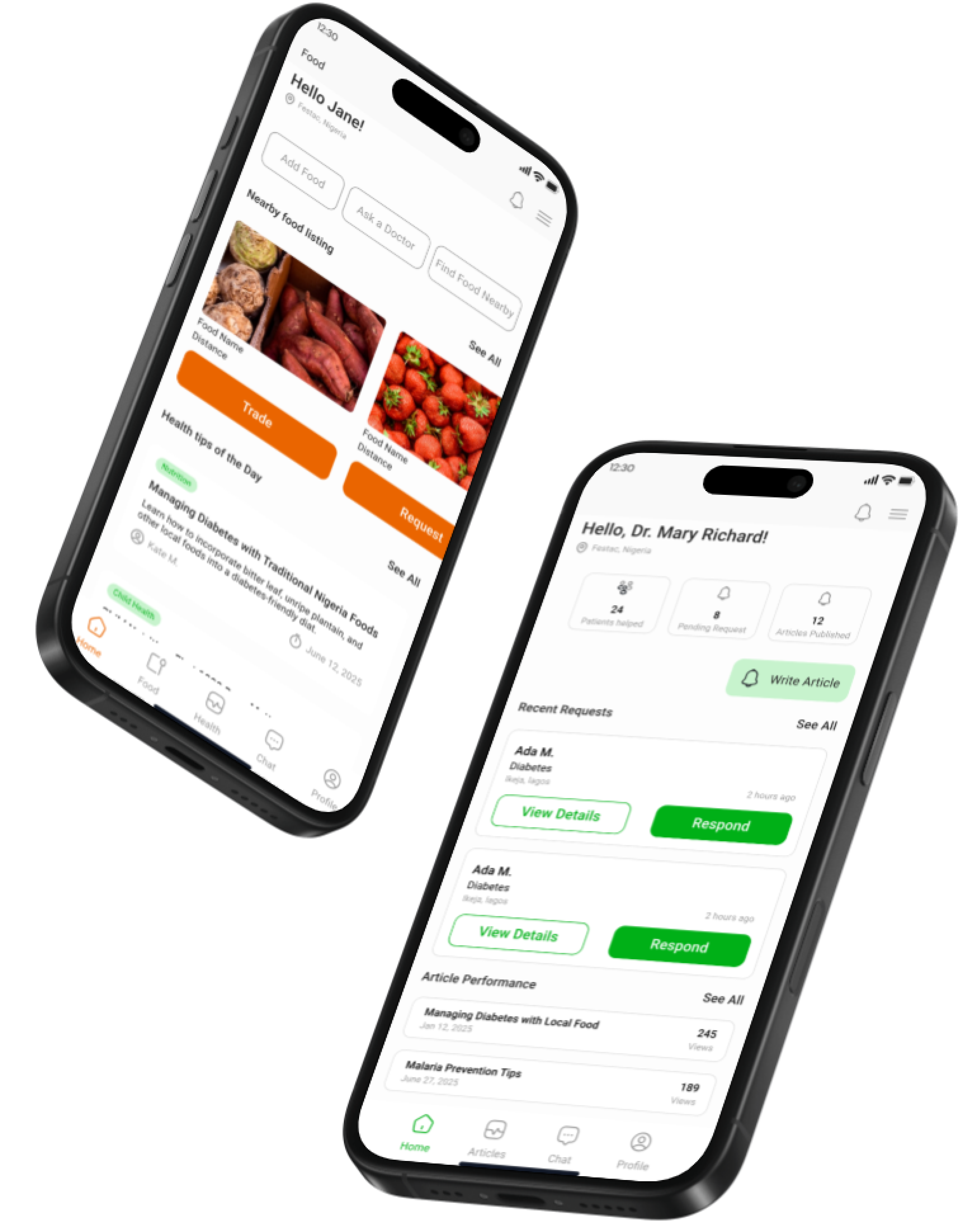
Connecting Nigerians to Nutritious Food and Basic Healthcare Advice
My Role: Product Manager & Product Designer
Timeline: June – July 2025
Platform: Mobile (Android, iOS)
Overview
FoodMed is a community-first digital platform designed to bridge two critical gaps for underserved Nigerians: access to nutritious food and basic health advice. It combines a bartering-based food exchange system with verified, low-data health consultations to support individuals and families facing economic hardship.
As the solo Product Manager and Designer, I took the idea from concept to MVP. My goal was to create a platform that promotes dignity and sustainability in food access while delivering life-saving health education through trusted channels.
The Problem
In Nigeria’s low-income communities, people struggle daily with:
Food insecurity – Rising inflation and unemployment limit access to food.
Limited healthcare access – Clinics are far or expensive, and misinformation thrives.
Shame or stigma – Many feel uncomfortable asking for help or charity.
Yet in the same communities:
Some people have surplus food (like farm produce or bulk rice).
There is strong social willingness to help if the right structure exists.
My Approach
User Research
Conducted interviews and WhatsApp polls with:
8 community volunteers & NGO leaders
10 food vendors & low-income caregivers
6 nurses & health workers
Findings:
Most people preferred exchange or bartering over donations "I’d rather give something and get something."
WhatsApp was the most trusted digital channel.
Access to health advice was often limited to friends or faith-based channels.
Product Strategy
Vision: Build a bridge between health, food, and community dignity.
Core Goals:
Enable bartering of surplus food or home items.
Provide basic, accessible health advice.
Allow volunteers or health workers to moderate and support requests.
Key Features
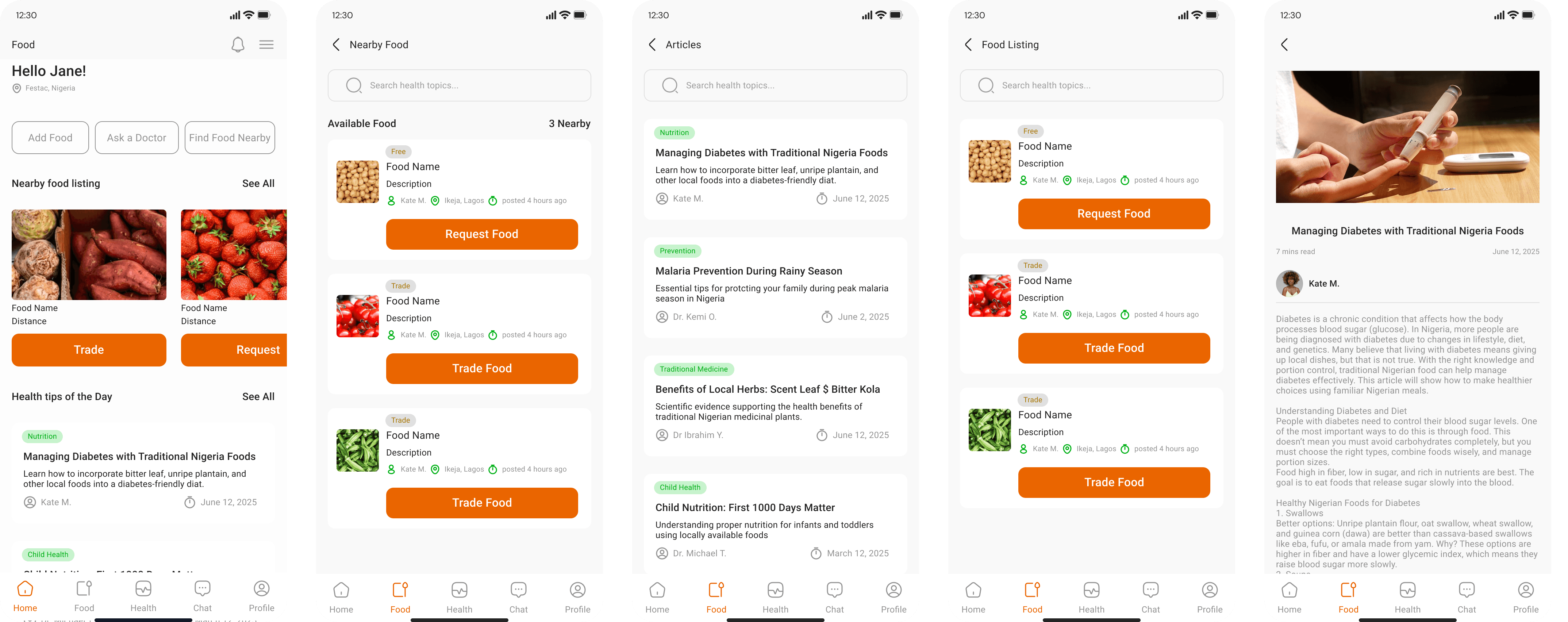
Food Request & Exchange Board
Users can post requests ("I need 2 cups of garri") or offerings ("I have ripe plantains to share") and connect with others for an exchange.
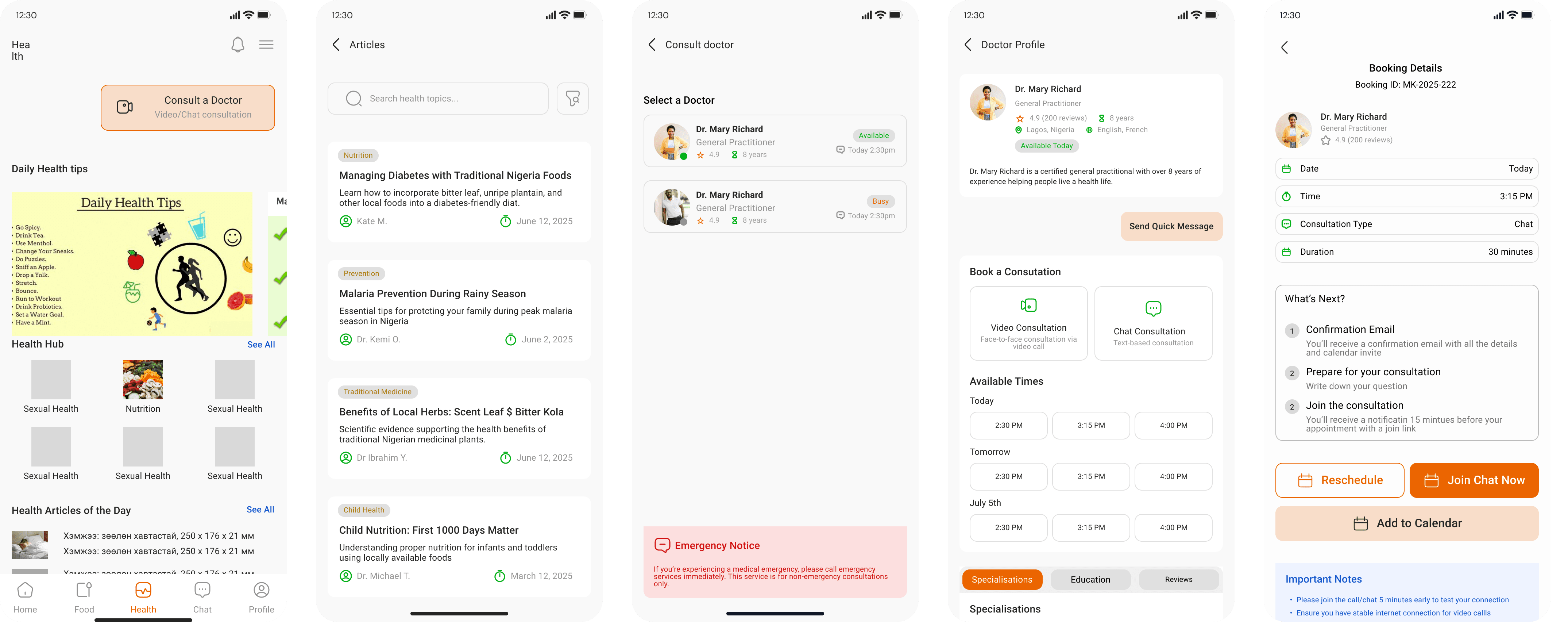
Verified Health Advice Bot
AI-powered chatbot delivers WHO-backed health responses (e.g., on malaria, nutrition, pregnancy). Local health volunteers can override or support when needed.
Community Points System
Users earn points for contributing items or volunteering time, redeemable for airtime or food vouchers.
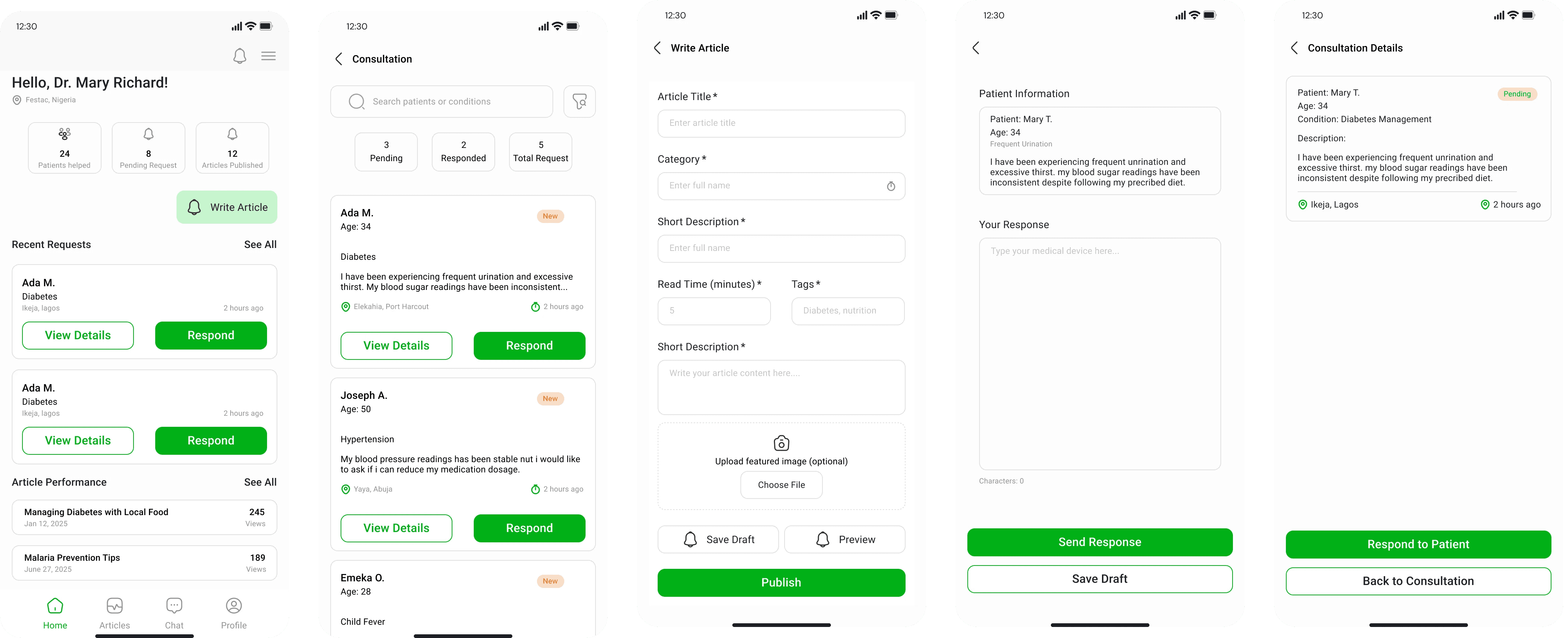
Volunteer-Only Admin Dashboard
Health workers and moderators can review flagged posts, update health tips, or guide users through safe exchanges.
MVP Scope (Defined with MoSCoW)
Must-Have Features
Anonymous food exchange board (request or offer)
Basic health chatbot with pre-vetted responses
Quick registration with nickname and location
Multilingual voice/text prompts
Should-Have Features
Volunteer moderator dashboard
Community reporting for flagged content
Location filters for nearby help
Could-Have Features
User profiles with community contribution points
Ratings for food safety or reliability
Partnerships section for verified health support
What I Learned
Dignity-driven design matters: Users were more likely to engage when they felt they were offering value—not just receiving aid.
Low-tech is smart tech: SMS alerts and WhatsApp-based verification made the experience more inclusive than requiring a full app download.
Collaboration builds trust: Partnering with small local clinics and churches helped spread adoption.
My Role Breakdown
Conducted deep research: Interviewed underserved Nigerians via WhatsApp voice notes and community partners.
Defined product strategy: Focused on dignity-driven access to food and health education.
Scoped MVP & wrote epics/user stories: Broke down features into small, testable chunks for lean delivery.
Built and tested prototypes: Validated features with local volunteers and adapted based on constraints.
Planned rollout & impact metrics: Aligned launch with NGOs for broader adoption and feedback loops.